 Log in



 I felt like I was going crazy. I had a small bump on my stomach and an aching pain in my ribs, and my Google searches pointed to a scary explanation: shingles. I made an appointment to see my doctor, certain it would turn out to be nothing.



A statewide program to help Californians with lower incomes buy electric bikes was suddenly scrapped last month, surprising bike advocates and raising questions about a lack of transparency.
The California E-Bike Incentive Project offered up to $2,000 toward the purchase of an e-bike.. More than 100,000 people applied in the program’s first round despite only 1,500 vouchers being available then. The project ultimately distributed 2,100 vouchers through two rounds of funding.
A third round was expected early next year, but the California Air Resources Board, which oversaw the program, diverted the remaining roughly $18 million to Clean Cars 4 All. That program allows people to turn in their old high-polluting cars in exchange for assistance to purchase an EV or hybrid vehicle.
Lindsay Buckley, a spokesperson for CARB, said the agency made this decision because of budget concerns.
“The legislature had to make some really tough decisions last year about what was going to be funded and prioritized,” Buckley said. “And so, this is ultimately the outcome of legislative direction.”
She added the e-bike program could return in the future, but she wasn’t clear on when.
Transparency concerns
The decision surprised bike advocates because there was no public input or discussion. They’re also unclear on why the program was scrapped and who authorized it given that budget discussions ended months ago.
CalBike spokesperson Andrew Wright said his organization was the first to report the sudden shift.
“That I think is what rankled some of us most, is this quiet just sort of pushing under the rug. Because we don't exist to break news, and the fact that we did is odd,” he said.
CARB did not publicly announce its decision to end the incentive program. The website for e-bike incentive applications also remained unchanged for roughly three weeks after the decision was made. A statement letting people know that they are no longer accepting applications was recently added.
Some retailers were also surprised by the decision. The voucher program directed customers to local bike shops that were part of a statewide network CARB created for the program to encourage people to not only buy e-bikes, but to do so locally.
Mike Majors is the owner of The Electric Bike Shop on Broadway in Sacramento. He said he hoped to see how the incentives would play out over time.
“It didn't last very long so I can't really say how effective it actually was,” he said. “And I think we need a little more long-term data to figure out the pros and cons of the voucher program.”
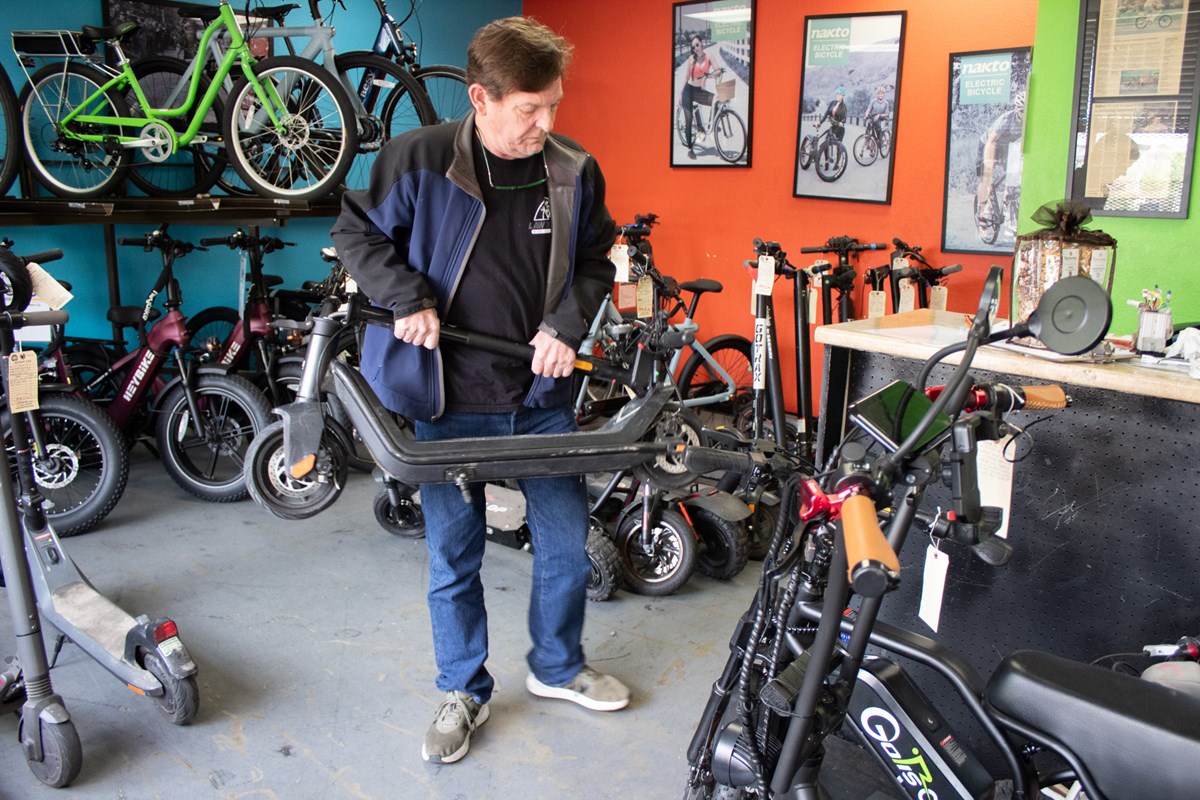 Mike Majors moves an e-scooter Monday, Nov. 17, 2025, at The Electric Bike Shop in Sacramento.(Gerardo Zavala/CapRadio)
Majors said only two customers used vouchers at his shop, which he said is likely because only a couple thousand vouchers were distributed statewide.
Clean Cars 4 All
The air resources board has also not explained its decision to transfer the money to the electric vehicle program, Clean Cars 4 All. Buckley said if people still want an e-bike, they could still qualify for a voucher through this program. But there’s a twist: applicants would now be required to have an old, high-polluting car to exchange for an e-bike voucher.
Wright, with CalBike, argued that exchanging gas cars for electric cars goes against California's goals of reducing emissions and traffic congestion.
“An electric car is just the same as an internal combustion car,” he said. “The only real way out of these problems is not going to be cars. You can't car your way out of a car problem.”
CalBike and several partner organizations are urging California to restore funding to the e-bike program.
CapRadio provides a trusted source of news because of you. As a nonprofit organization, donations from people like you sustain the journalism that allows us to discover stories that are important to our audience. If you believe in what we do and support our mission, please donate today.
 reply
reply
